
In conversation with Liz Meier
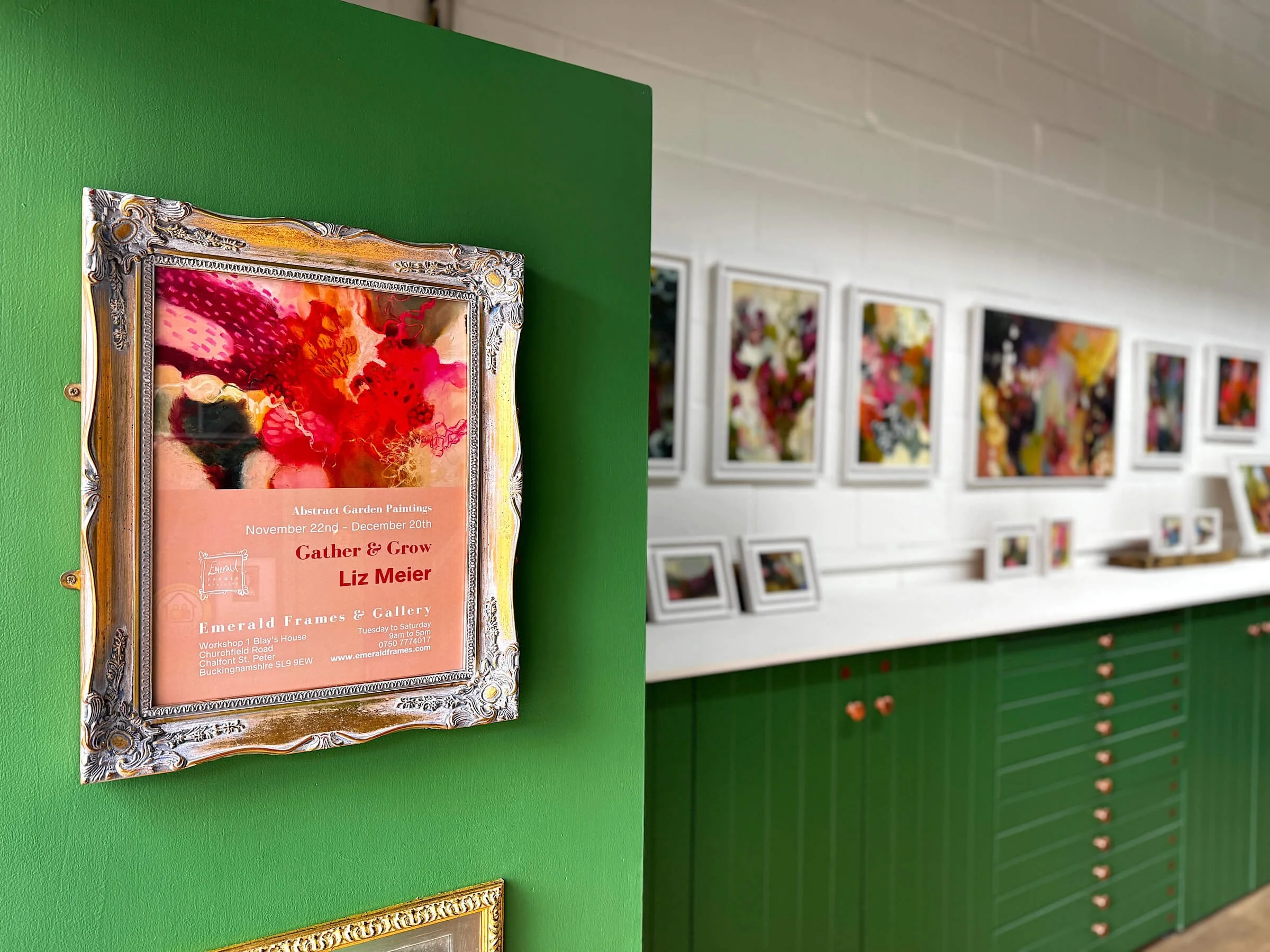
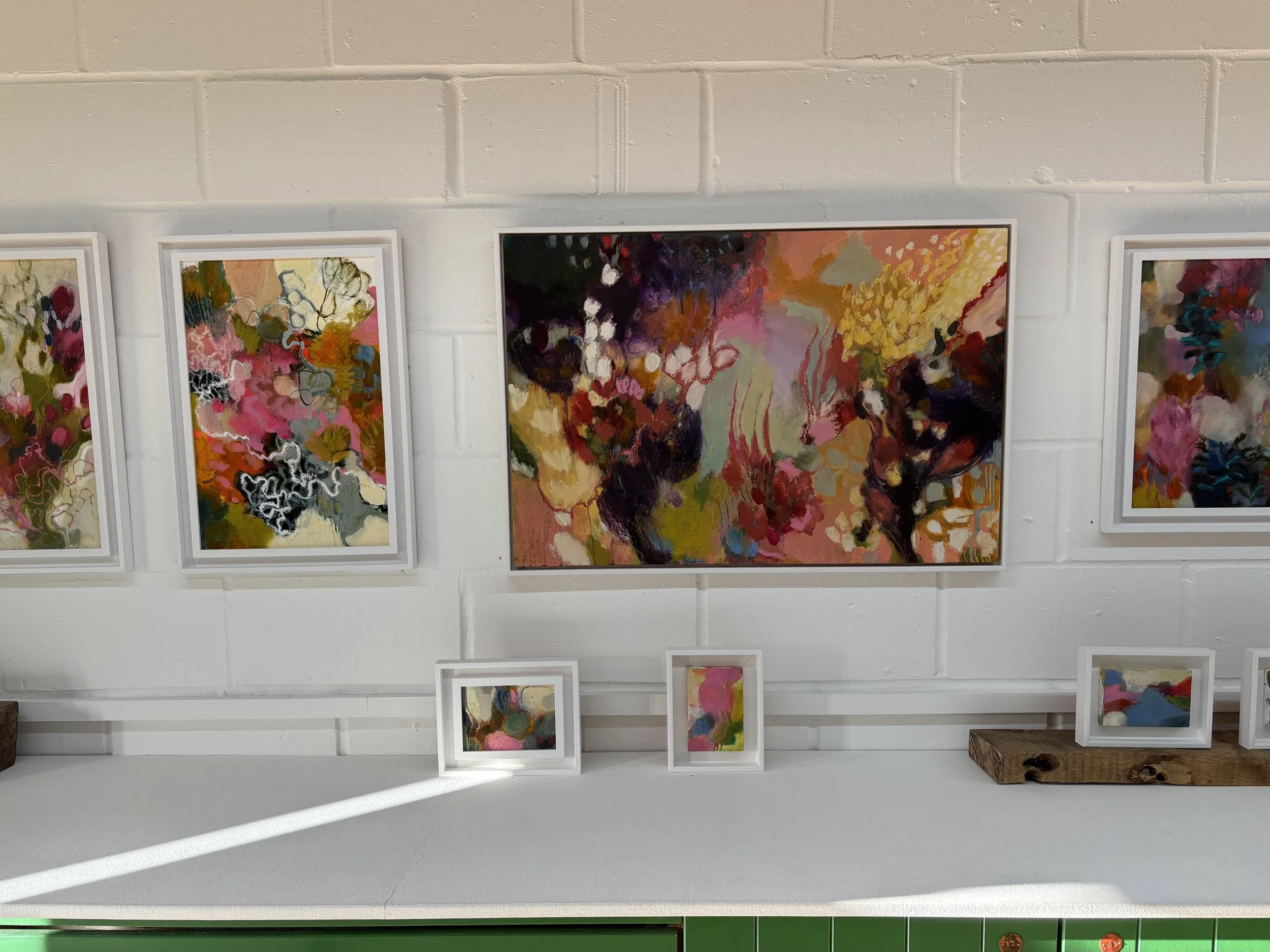
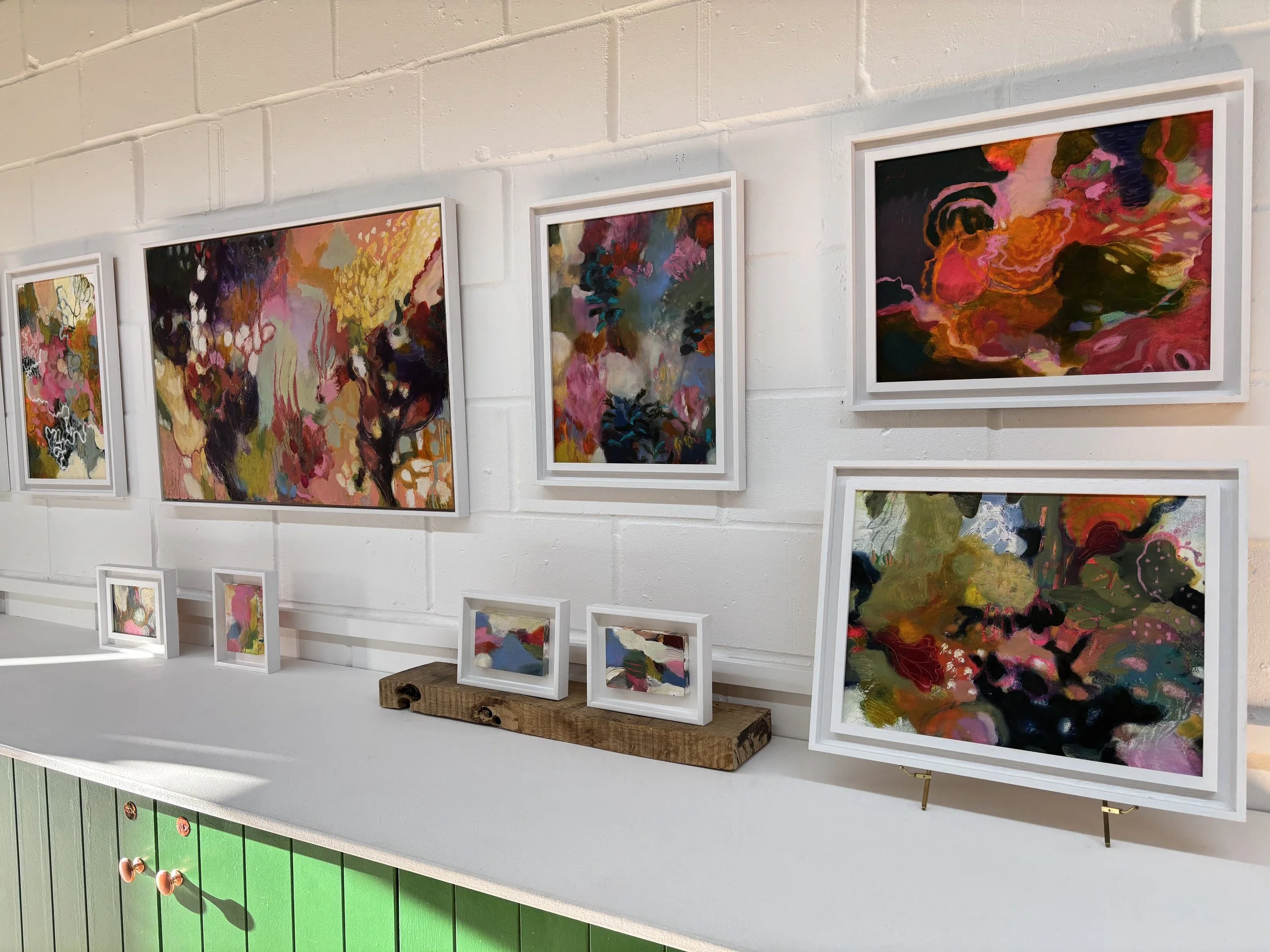
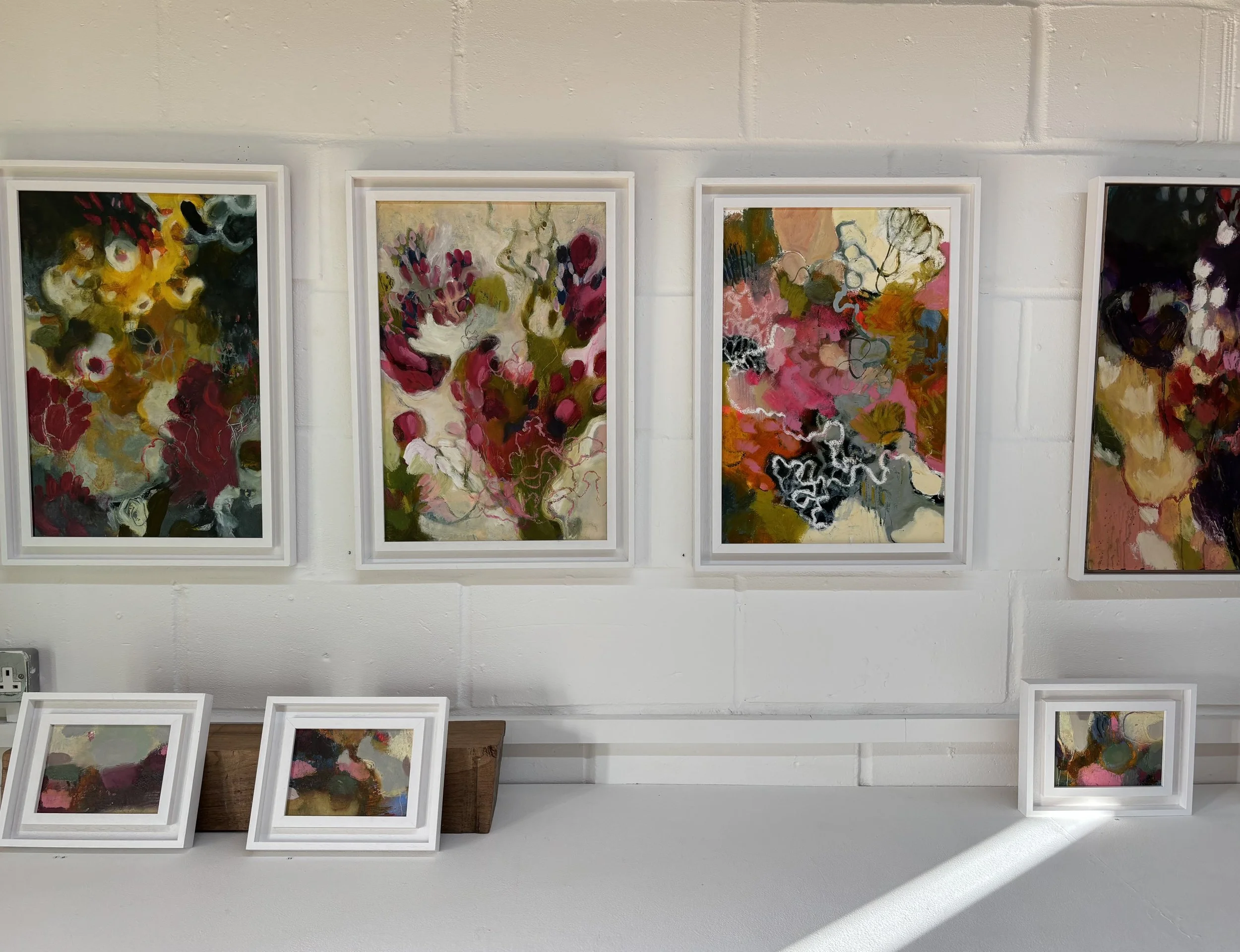
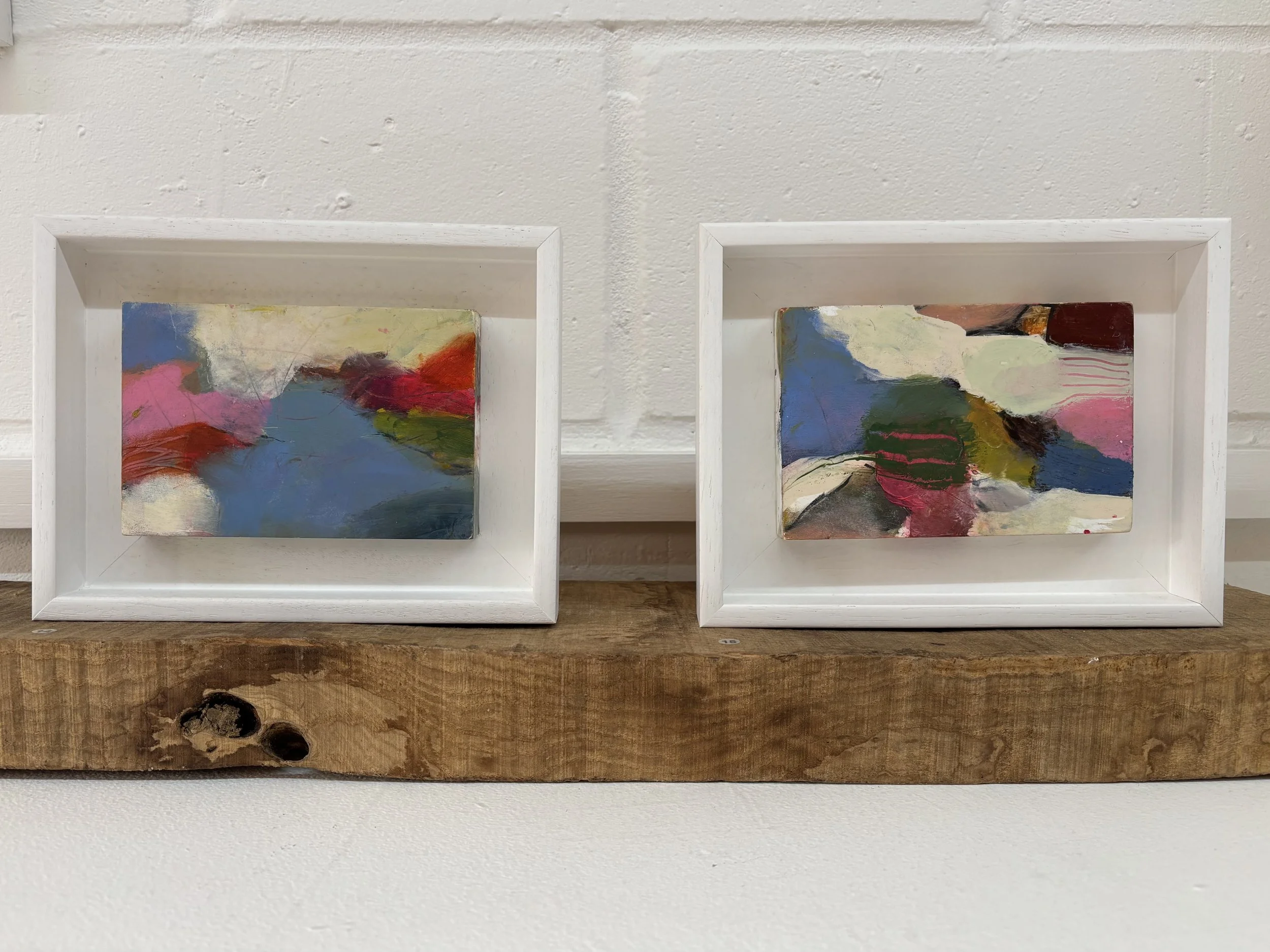
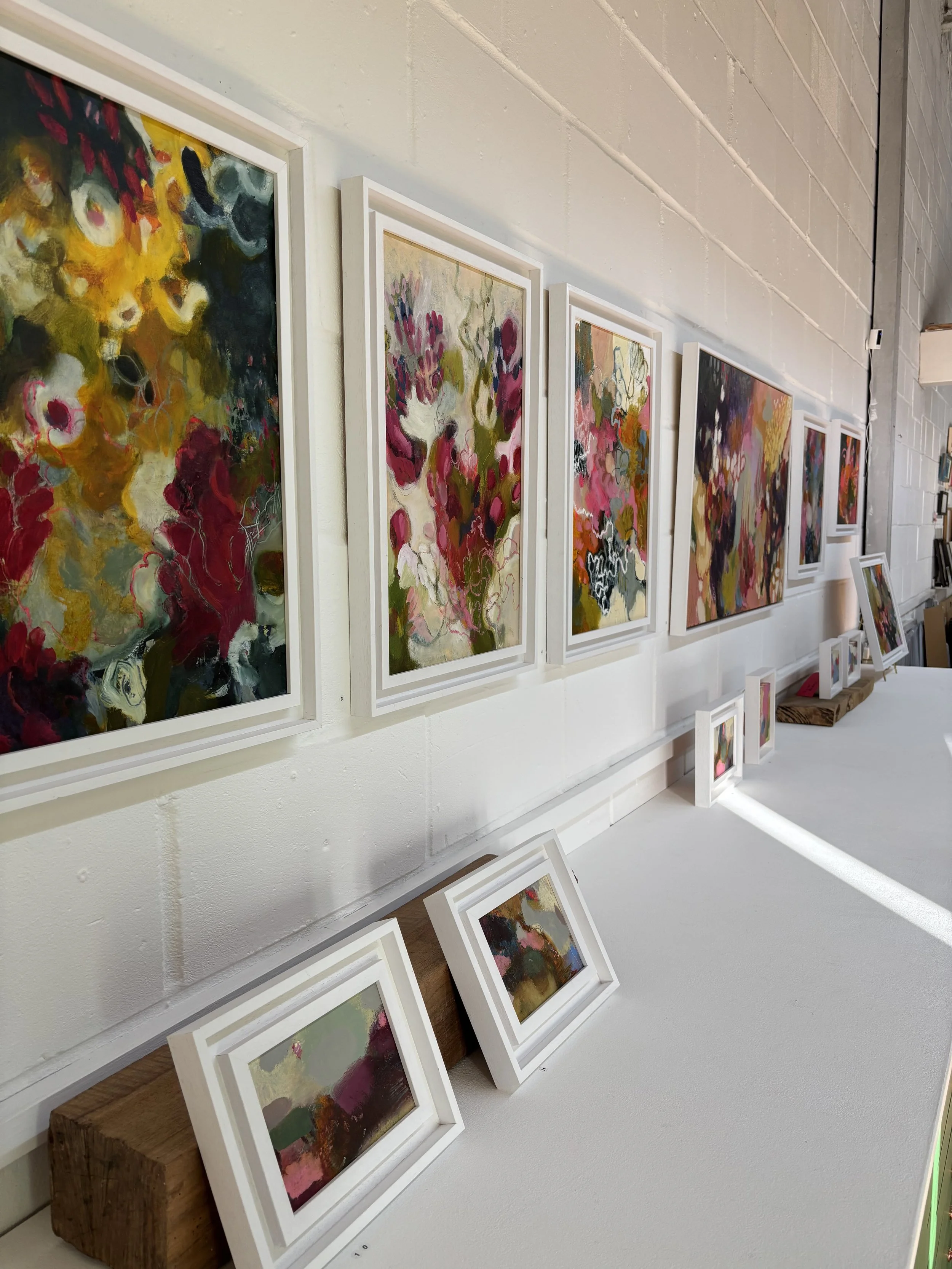
We’re really happy to be hosting Liz Meier and her beautiful abstract garden paintings here at the gallery. Her work is inspired by time spent in gardens, taking in the colors, textures, and quiet moments that happen there, and turning them into colourful, expressive paintings. In this interview, we sit down with her to talk about where these works began, what keeps her coming back to gardens for inspiration, and what it’s been like bringing this exhibition together.
So, grab a cup of tea and enjoy getting know Liz with us…..
Background & Inspiration
• Can you tell us a little about your journey into becoming an artist?
I have drawn, painted, and made things all my life, but my true art education began when my children started school and I had time to study, completing an A level, a Foundation Course, and a BA (Hons) in Fine Art.
• Were there any early experiences or influences that led you toward painting, especially in oils and acrylics?
I wanted to paint in oils but got waylaid and made sculptures in wire and textiles, using wax and latex, for my final degree project. I always knew I would be able to paint later on.
• What draws you to abstract art, and how did you find your way into this style?
In the second year of the degree course, we did a small project where we used four marks to make a painting. I pursued this idea in more textile-based work but always wanted to revisit it in paint.
After the degree show, I moved into a studio at Commercial Square with other artists and started to make very abstract paintings. I was teaching adults drawing and painting at the same time, so had plenty of opportunities to study other artists’ work and to discover what I liked.
• Why do gardens—or nature more broadly—speak to you as a theme?
I think that most of my work over the last 25 years has been to do with the outside world. When I was a student, one of my favourite quotes was:
“Art reveals what it is like to be human and live in the world.” — John Dewey
My fascination has always been with what it’s like, rather than what it looks like: how it feels to be walking on the cliffs, sitting in a garden, swimming in the sea, climbing a hill, etc.
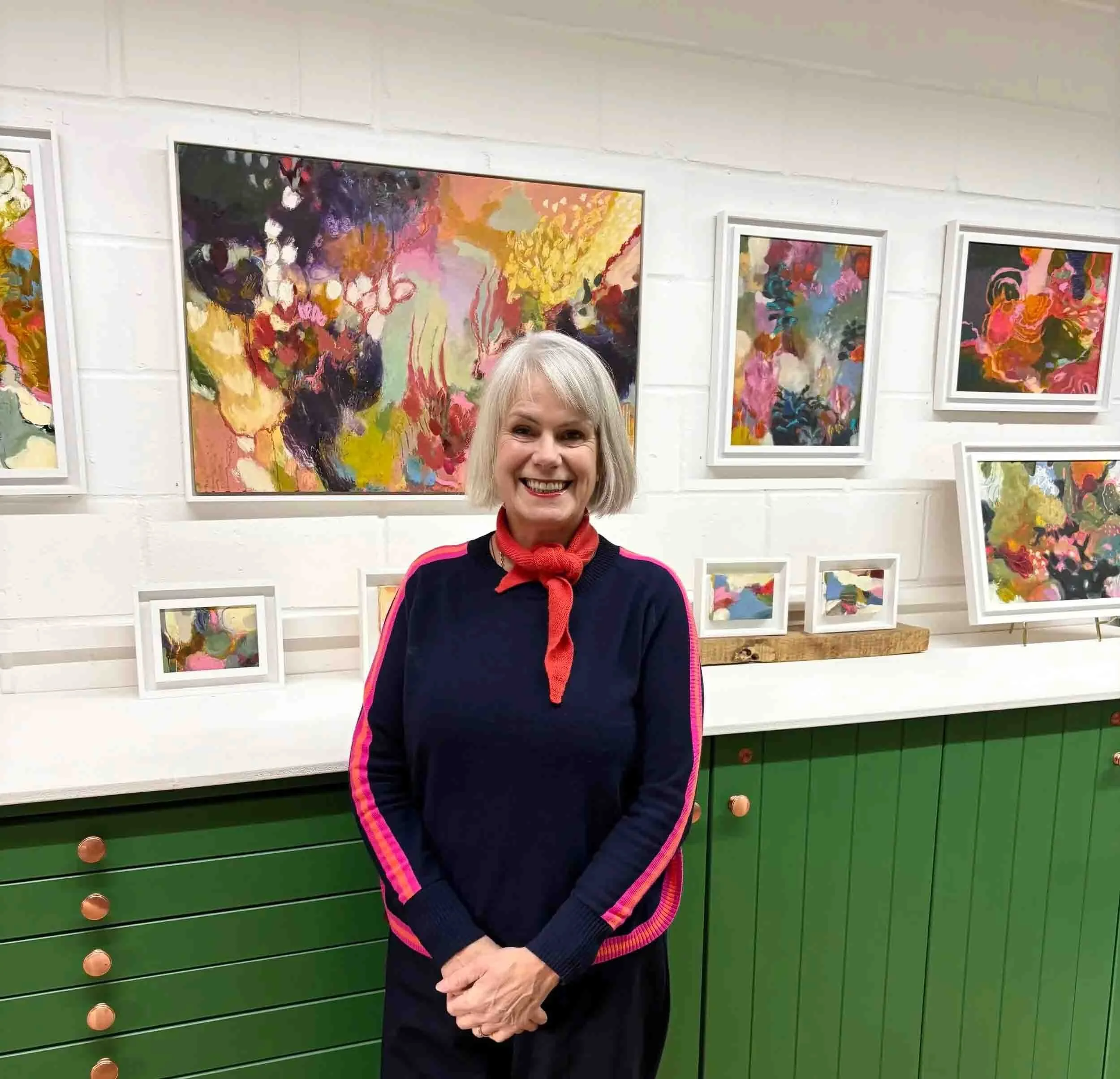
Liz at the Gallery
About the Current Exhibition
• How did this garden-themed exhibition begin for you? Was there a particular moment or idea that sparked it?
For a long time I had wanted to find a way of working outside that would feed into my practice. I did a Summer School workshop with Emily Ball at her studios in Sussex. We spent two days in Highdown Gardens making studies before returning to the studio to use them as a springboard into paintings.
When I came back from the workshop in Sussex, I started to apply the methods we had been using to my own garden—sitting under the big horse chestnut with charcoal and ink, or in a little corner—just responding to what was around me: an insect flying by, a bird singing, as well as the shapes and colours.
• Is there a piece in this show that feels especially personal or meaningful? What’s the story behind it?
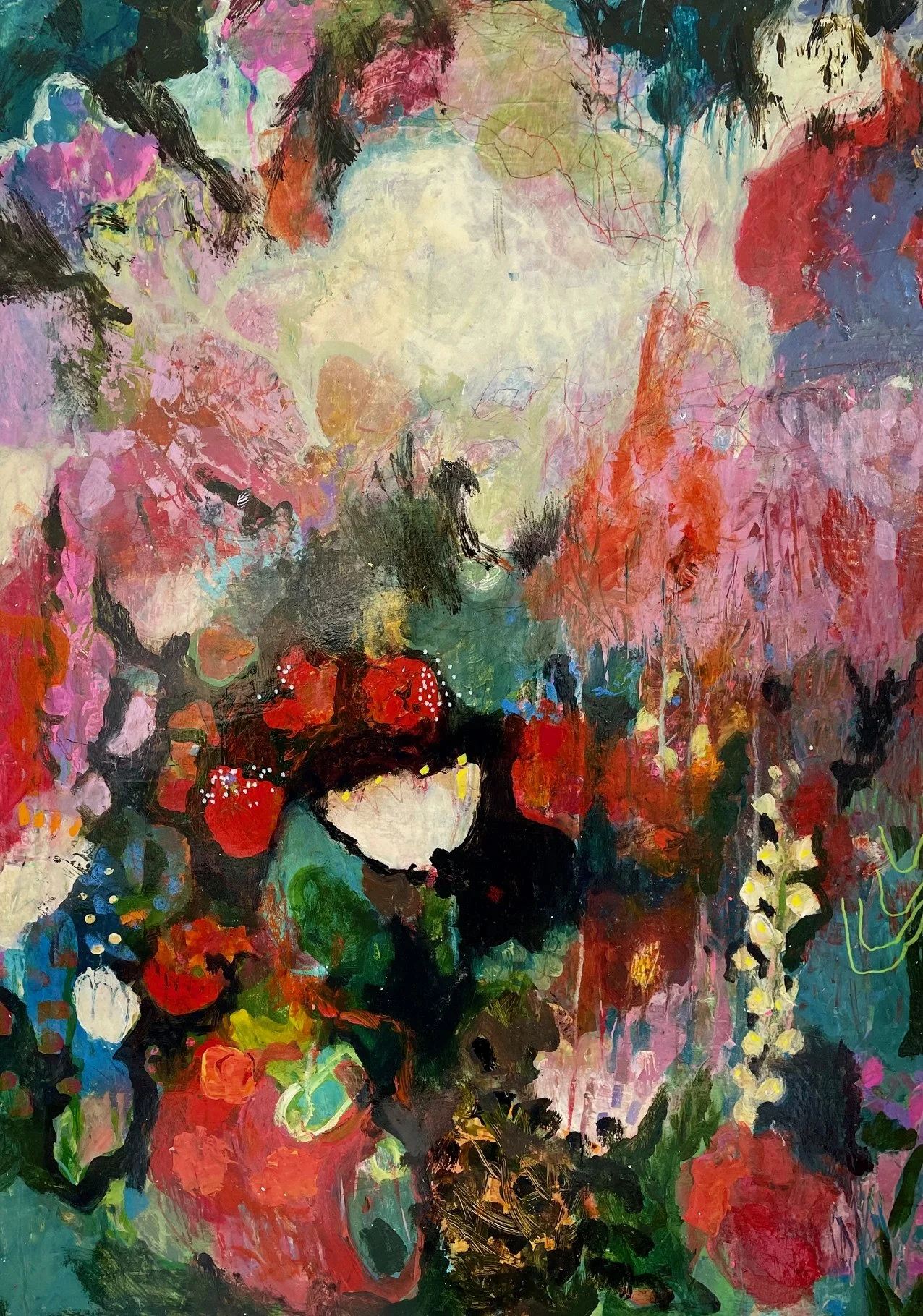
The first painting was the acrylic one, Summer Garden. It does feel like my garden last year. After this one I changed to oils, so it’s unique in this body of work. It has bits in it that I have no idea how to do again.
• If visitors could take away one feeling or impression from this exhibition, what would you hope it is?
The garden is a magical space. If I sat and painted it as it looks, I don’t feel that I could tap into the magic. By embracing this form of poetic response, I can tap into the power of association and hope to promote a feeling of recognition in the viewer.
Process & Materials
• Do you have a preference between oils and acrylics for this kind of work?
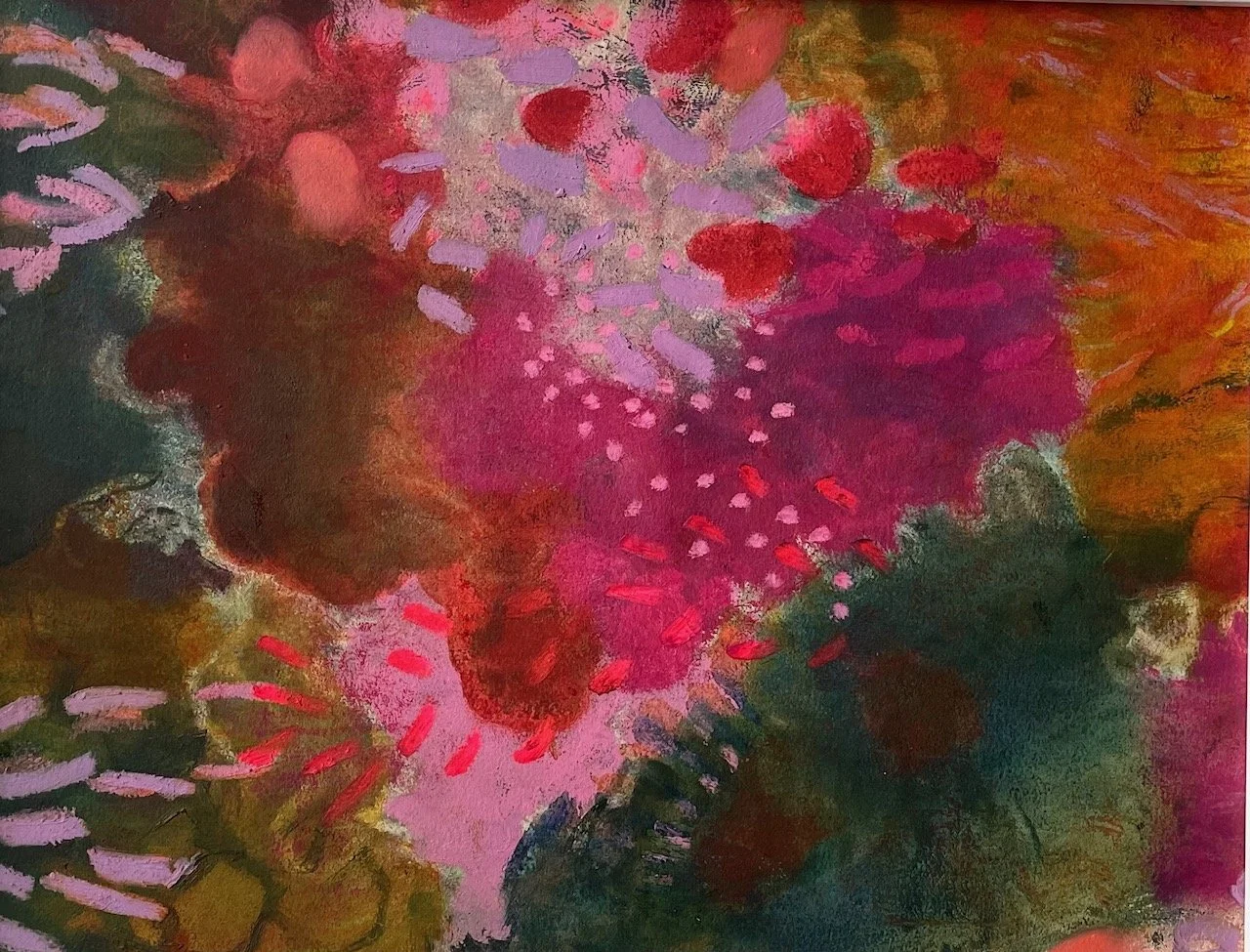
I do still enjoy both. I can get some fabulous results with acrylics—I use a lot of mediums to keep them rich and vibrant—but the more tactile nature of oils, and the slower process, is my favourite at the moment.
• What does a typical painting session look like for you—quiet and focused, or energetic and intuitive?
I am always trying to inject energy into my work, so sometimes I have to put on some music and work energetically. I always stand, never sit. I try not to get too tightly focused. I rarely work for more than a couple of hours at a time. I have a lot of paintings on the go at any one time, usually a couple of bigger ones and some smaller pieces too.
• How do colour and texture guide your decisions when you’re working abstractly?
I work with a fairly limited range of primary colours on the palette, but have lots of oil bars to hand too. Texture happens in the process. I use rags, sponges, and fingers a lot to apply paint. I also probably remove as much paint as I put on, using rags, scrapers, or newspaper.
• Do you plan your compositions ahead of time, or do they develop more spontaneously?
No planning—but I choose studies from my outdoor work that speak to me, and find ways of creating the marks and interventions within them.
• Are there any unconventional tools or methods you enjoy using to build your layers or marks?
I think people would be very surprised by how much paint I remove. I pick up piles of free newspapers and keep them in the studio, constantly using them to blot the paint and push marks into the surface. Turps-soaked rags, scrapers, and sandpaper are in frequent use too.
Creative Mindset
• What helps you get into the right headspace to paint?
Being outside, walking around the garden before I go to the studio, and warming up with some mark-making.
• Do you ever look back at a finished piece and see something new or unexpected in it?
Yes, especially if I put it away and come back to it later.
• How do you know when an abstract piece is ‘finished’?
I don’t! Sometimes I think something is finished and then go back and rework it later. Sometimes I go past the finish and look back at photos and realise I’ve gone too far. Usually, by carrying on, I find something that works. I like to make something I would want to keep.
Personal Reflection & Future Work
• How has your work evolved over time—artistically or personally?
I have always been keen to play and experiment with materials and paint. I enjoy the process of painting: layering, removing, making a mess, finding a way in or out.
I think my recent work is more focused on a subject than my older work, which was more generically abstract landscape or very specific to a place. This type of poetic response to a time and place feels very satisfying at the moment.
I read what artists say about their work and let that filter into what I do.
• What have you learned about yourself through this body of garden-inspired pieces?
I have learned that I am more of a painter than a gardener. I love the mess and muddle; I am happy for things to spread and grow and find themselves.
• Is there something new you’re excited to explore next, either in theme or technique?
I want to keep working in this way. I will carry on with my garden paintings, but I would like to look at faces and figures as well—maybe to incorporate them into the garden too.
A Light Wrap-Up
• If your studio were a garden, what would grow in it?
I think my studio is a garden, actually. It’s where I sow seeds, nurture them, and let things grow.
• What music, scents, or snacks keep you company while you paint?
Sometimes music—not always—but it can boost things. I’ve been listening to Steve Reich’s Music for 18 Musicians, which can change the energy rather wonderfully. The smell of linseed oil. No snacks—I’m far too messy to have more than a cup of tea, and even that’s a risk.
• If you could invite any artist—past or present—to wander through this exhibition with you, who would it be?
There is a young artist, Flora Yukhnovich, whose work I admire. She makes huge, amazingly fresh oil paintings in response to Baroque or Rococo art. I would love to have a few minutes of her time.
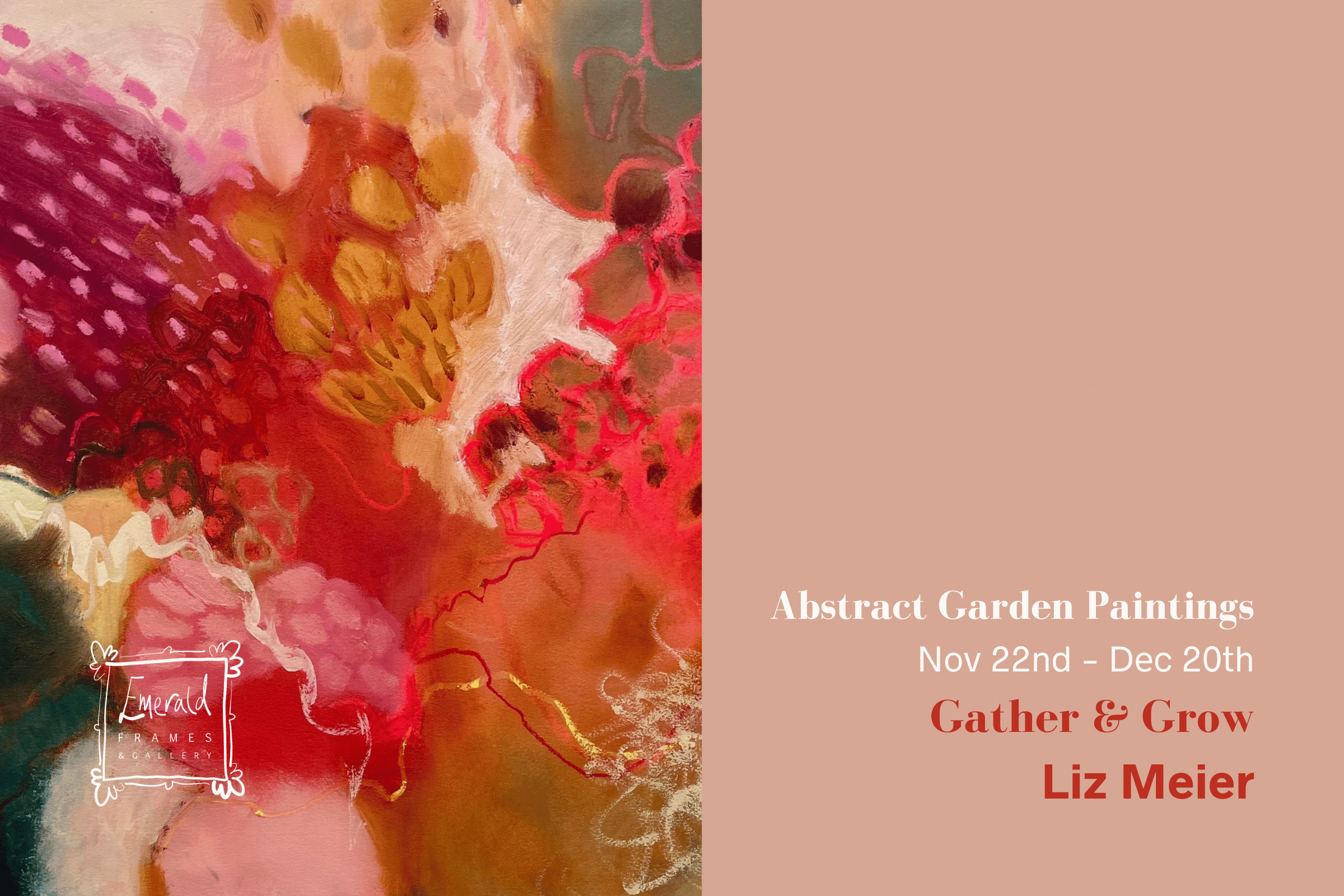
Gather and Grow is in its final week, so don’t hesitate to visit before its closes this Saturday!!